


For years, Nar Phu has caught the imagination of travelers, scholars, and adventurers alike, a hidden corner of Nepal where Tibetan culture endures in its most authentic form. The Nar Phu Trek is perhaps the only way to witness these extraordinary settlements up close, to walk the trails that thread through villages unchanged for centuries. In the villages of Nar and Phu, stone houses with flat-roofed courtyards cluster around streams and cultivated fields, while Buddhist monasteries of the Nyingmapa sect anchor both spiritual and social life. Seasonal migration shapes the rhythm of existence, as families move to lower altitudes in winter, tending livestock and sustaining trade networks that stretch across the Annapurna region. The people speak their distinct dialect, practice age-old rituals, and maintain an economy built on animal husbandry, modest agriculture, and carefully managed exchanges with neighboring valleys, preserving a cultural landscape that has remained remarkably intact over generations.
Nar Village, home to just around 55 households, is the larger of the two settlements. Houses are clustered together in a design reflecting both practicality and tradition. Most homes are two-storied: the ground floor shelters cattle and stores fodder, while the upper floor contains the kitchen, storage, and living quarters. Flat rooftops double as courtyards, and entry is often from above. This is a feature adapted to the harsh Himalayan environment. Nearby, arable lands in Chaku and Metang support cultivation and winter grazing. Seasonal migration is a way of life: most villagers leave Nar for lower altitudes from mid-December to mid-February, while elders and a few household members remain to tend cattle and maintain the homes.
Phu Village, smaller and more tightly clustered with 48 households, mirrors Nar in architectural style but places even greater emphasis on communal living. Streams run through the village, dividing arable land and providing water for livestock. Phu hosts one large Buddhist monastery in the center and another significant monastery, Tashilhakang, across the I.hodal stream. The presence of these monasteries reflects the central role of spirituality in daily life, as the villagers follow the Nyingmapa sect of Tibetan Buddhism.
The Nar Phu Valley, apart from being a remote trekking destination in Nepal, is also a repository of authentic Tibetan culture and tradition. Tucked between the Peru Himalaya to the north, Gangla and Gangru ranges to the east, and the Damodar Himalaya to the west, the valley’s isolation has preserved a way of life largely unchanged for centuries. Its proximity to Tibet, combined with historical interactions with surrounding regions like Nyesyang, Gyasumdo, Larke, and Mustang, has shaped the unique identity of the valley’s inhabitants. Nar and Phu villages, perched at elevations of 4,183 meters (Nar) and 4,050 meters (Phu), remain high-altitude sanctuaries where Tibetan influence is deeply embedded in daily life.
The valley itself is striking: pine and fir forests surround the lower elevations around 4,000 meters, gradually giving way to sparse vegetation and alpine terrain at higher altitudes. Snow blankets the valley from mid-December to early February, and a network of streams, including the Nar, Phu, Semtang, and Lhodal. This sustains the agricultural plots scattered across the rugged landscape. Despite appearances, the valley is less windy than the neighboring Nyesyang valley, offering a sheltered environment for human settlement and livestock.
Culture, Religion, and Spiritual Life
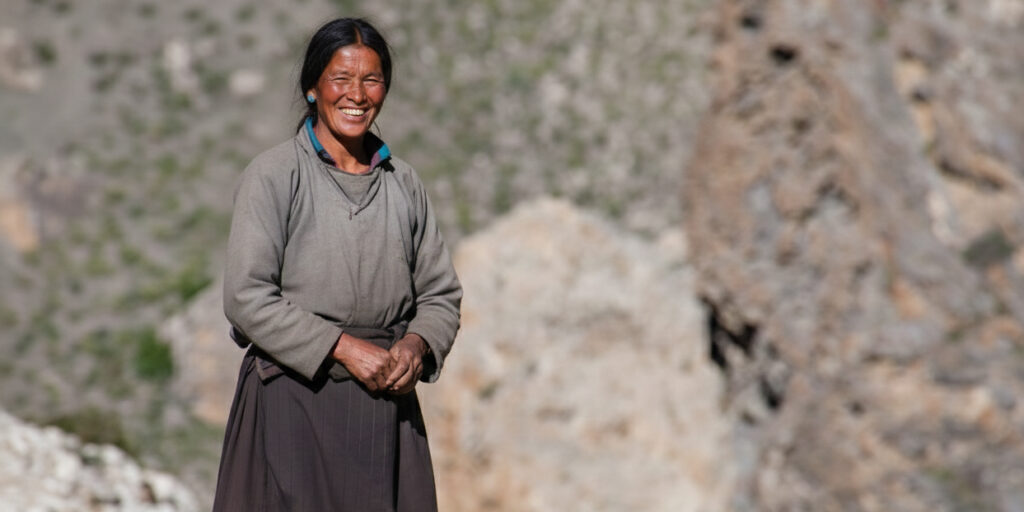
Religion is the lifeblood of Nar and Phu. Lamas trained in these villages are sought after throughout the region, performing rituals in nearby villages and training young monks, particularly in Lamjung, where Nar-trained lamas have historically influenced local Gurung communities. Monasteries in both Nar and Phu are centers of religious practice, preserving centuries-old wall paintings, thangkas, and sculptures. The spiritual rhythm of the valley is also evident in the careful observance of festivals, household rituals, and seasonal practices that have endured through generations.
Economy and Seasonal Practices
The economy of Nar and Phu is based on animal husbandry, subsistence agriculture, and seasonal trade. Harsh terrain and high altitudes limit crop production, making livestock—particularly yaks and goats, which are the cornerstone of survival. The annual agricultural yield often suffices for only a few months, with most grain and staples imported from neighboring valleys such as Nyesyang, Gyasumdo, and Lamjung. Trade and migration are essential to the villagers’ economy. During winter months, more than 70% of the population migrates to lower-altitude regions in central Lamjung, Tanahu, Kaski, and Gorkha, trading blankets (phyarpa and lue), ropes made from yak and goat wool (syoba), herbs, and goatskins for grain, chili, and other essentials. Seasonal labor is common, with villagers working in Nyesyang fields in exchange for grain, cash, or meals. The profits from these activities are invested in purchasing necessities for the household, maintaining the delicate balance of survival in a harsh, remote environment.
Social Networks and Community Relations
Nar and Phu villagers maintain close ties with surrounding communities. The villages of Thanchok and Tache in Gyasumdo play a key role as suppliers of grain and as financial partners, storing and lending resources to Nar and Phu households during the winter months. Traditional obligations and clan affiliations are also central to social life. For instance, the Bandilam lineage of Thanchok claims ancestral ties to Nar, and the Ghale clan employs lamas from Nar to perform funerals and household rituals, reflecting the intricate web of kinship, religious authority, and historical tradition. The villagers’ careful balancing of trade, labor, and subsistence living demonstrates a resilient, adaptive lifestyle shaped by geography, climate, and centuries of tradition.
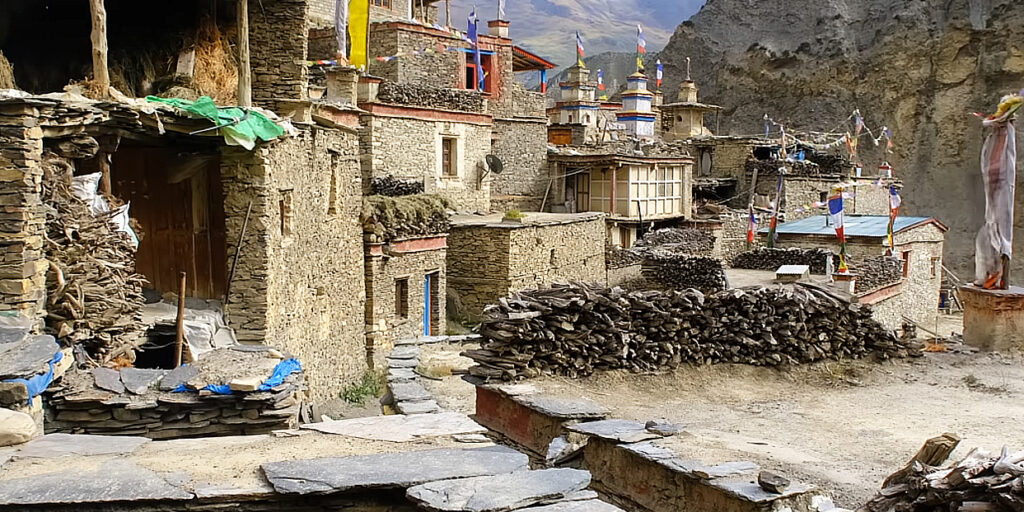
For travelers, meeting the people of Nar and Phu is a profound experience. Their daily routines, such as tending livestock, cultivating land, performing rituals, and engaging in seasonal trade, displace a way of life that is deeply connected to the land and their spiritual beliefs. Visiting these villages on the Nar Phu Trek offers an opportunity to witness a rare, unspoiled Himalayan culture, one that is both ancient and vibrantly alive. Every stone house, monastery, and cultivated terrace tells a story of endurance, faith, and community, making the Nar Phu Valley a wide window into the soul of the Himalayas.
