


Bhutan is a kingdom in the Eastern Himalayas where culture is not part of an archive or museum but woven deeply into everyday life. In Bhutanese culture, community, values, belief, and tradition are inseparable. Visitors discover a people who maintain ancient practices with intention and pride, and who measure progress not merely by wealth but by the well‑being of their communities.
Traveling through Bhutan feels like stepping into a world where every action, gesture, and celebration carries meaning. The mountains, rivers, and valleys are not just scenery but companions to daily life, and the people’s connection to their land and heritage is palpable in every village and town. Visitors quickly sense that Bhutan is a place where culture is lived rather than performed, offering experiences that linger long after the journey ends.
For travelers who seek to understand how culture can be lived with intention and grace, a Bhutan Cultural Tour provides an immersive experience that reveals the kingdom’s heart and spirit.
1. Buddhism as a Foundation for Daily Life
Buddhist philosophy is at the heart of how people in Bhutan understand the world. It influences customs, celebrations, and community rhythms, shaping how time is marked and how life is lived. Temples and monasteries stand in villages and valleys, inviting both devotion and reflection. Many homes contain small altars or sacred symbols that remind inhabitants of spiritual values. Prayer wheels and flags appear throughout the landscape, each a testament to ongoing devotion embedded in daily routines. This continuous practice of belief is a defining feature of Bhutanese identity.
2. Colorful Festivals as Communal Expression
Festivals in Bhutan are vibrant expressions of faith and social life that draw families and communities together in ritual celebration. These occasions include elaborate mask dances and performances that tell stories from Buddhist teachings and local mythology. The performances are not just artistic displays; they are communal rituals that reconnect participants with history, morality, and spiritual narratives that have endured for centuries. Through these festivals, tradition stays alive, remembered not through books but through movement, sound, costume, and shared experience.
3. Architecture that Reflects Spiritual Values
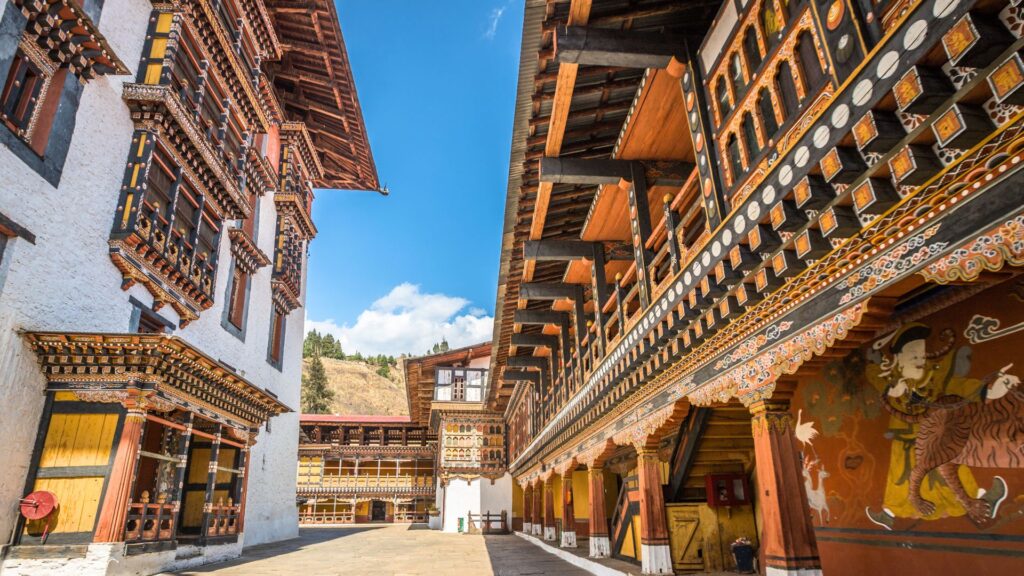
Architecture across Bhutan reflects an aesthetic language that carries spiritual meaning. Fortress‑monasteries known as dzongs are monumental yet intricately detailed, serving both administrative and religious functions. These structures combine massive presence with symbolic carvings and paintings that celebrate sacred narratives and cultural motifs. Temples and smaller shrines dot the countryside and cities alike, providing spiritual spaces that integrate religious life into the very form of Bhutan’s built environment. The reverence for harmony extends even to the design of domestic homes, where woodwork and ornaments express cultural identity and continuity.
4. Art, Craftsmanship, and Cultural Continuity
Art in Bhutan is inseparable from spiritual and cultural expression. The tradition known as Zorig Chusum preserves thirteen distinct traditional arts through apprenticeships and dedicated training, ensuring that thangka painting, woodcarving, metalwork, weaving, and other crafts continue to thrive. Bhutanese textiles stand among the world’s most revered, with intricate patterns and symbolic designs passed down through generations. These art forms serve both aesthetic and spiritual purposes, acting as visual narratives that reinforce cultural values and historical continuity.
5. Respect for Community Values and Shared Identity
Community life in Bhutan is built on principles of mutual support, respect, and continuity. Those values are not abstract ideals but everyday practices that shape social interactions and obligations. Customs related to hospitality, respect for elders, and communal participation reinforce a shared identity that transcends individual experience. Community spaces, whether in rural villages or towns, are grounded in traditions that bind people together across ages. Through shared practices such as storytelling, local cuisine, and collective observance of traditions, the sense of belonging remains strong.
6. A Philosophy of Happiness as National Purpose
Bhutan’s commitment to happiness extends beyond individual contentment to a national purpose that shapes public life. The concept of Gross National Happiness reflects an emphasis on well‑being, sustainable development, cultural preservation, environmental stewardship, and good governance. This philosophy is embedded in education, policy, and how communities approach life’s challenges and aspirations. When visitors learn about how Bhutan measures progress through dimensions of quality of life and cultural continuity, they encounter a worldview that values balance, harmony, and human flourishing.
