


The Thimphu Tshechu Festival stands as one of Bhutan’s most significant cultural and religious events. Most visitors are enthralled by the sacred masked dances in Thimphu Tshechu held during the three-day ceremony. Held each year at Tashichho Dzong, it honors Guru Rinpoche, the saint who brought Buddhism to Bhutan. Thousands of Bhutanese and visitors gather to watch masked dances called cham. Each dance carries deep spiritual meaning. People believe the performances bring blessings, purify negative karma, and strengthen faith in Buddhist teachings.
The dances have been a part of Bhutanese Tshechu tradition and local history for centuries. Monks and trained lay dancers wear elaborate masks and costumes that represent deities, animals, or symbolic figures. Drumbeats, cymbals, and horns fill the dzong courtyard while the dancers move in specific patterns. These performances convey key Buddhist values such as impermanence, compassion, protection, and the triumph of wisdom over ignorance.
Shana/Zhana Cham (Dance of the Black Hats)
Dancers wear tall black hats and robes. Their movements follow precise patterns to cleanse the ground and invite protective deities. The ritual removes negative forces and reminds spectators that spiritual protection and purity form the foundation of a peaceful life.
Guru Tshengye (Dance of the Eight Manifestations of Guru Rinpoche)
The dance shows eight forms of Guru Rinpoche, each representing a stage of his life and spiritual achievements. The performance guides viewers through a symbolic journey of transformation. It teaches that spiritual qualities can grow through dedication, discipline, and wisdom.
Durdag/Durdag Cham (Dance of the Lords of the Cremation Grounds)
Performers wear skeleton masks representing guardians of cremation grounds. The dance reminds everyone of the impermanence of life. It encourages reflection on mortality and inspires people to make mindful, ethical choices in their daily lives.
Tungam (Dance of the Terrifying Deities)
Dancers wear fierce masks and execute strong movements. The performance depicts wrathful deities who overcome negative forces. It demonstrates that confronting fear and inner obstacles leads to spiritual growth and clarity of mind.
Dranyen Cham (Dance with Instrument)
Dancers carry a traditional stringed instrument called a dranyen while wearing warrior attire. The dance celebrates the spread of the Drukpa lineage in Bhutan and highlights unity within the community. It honors the balance between tradition, cultural identity, and collective harmony.
Shawo Shachi (Dance of the Stag and Hounds)
This dance depicts a story from Milarepa’s life. A hunter, his dogs, and a stag are influenced by Milarepa’s teachings, moving from harm to peace. The performance teaches that compassion and wisdom can transform actions and bring understanding to all beings.
Shacham (Dance of the Four Stags)
Dancers wear stag masks to show Guru Rinpoche subduing the God of the Wind. The stags symbolize strength and harmony with nature. The dance teaches respect for all life and the ability of enlightened beings to bring balance and guidance.
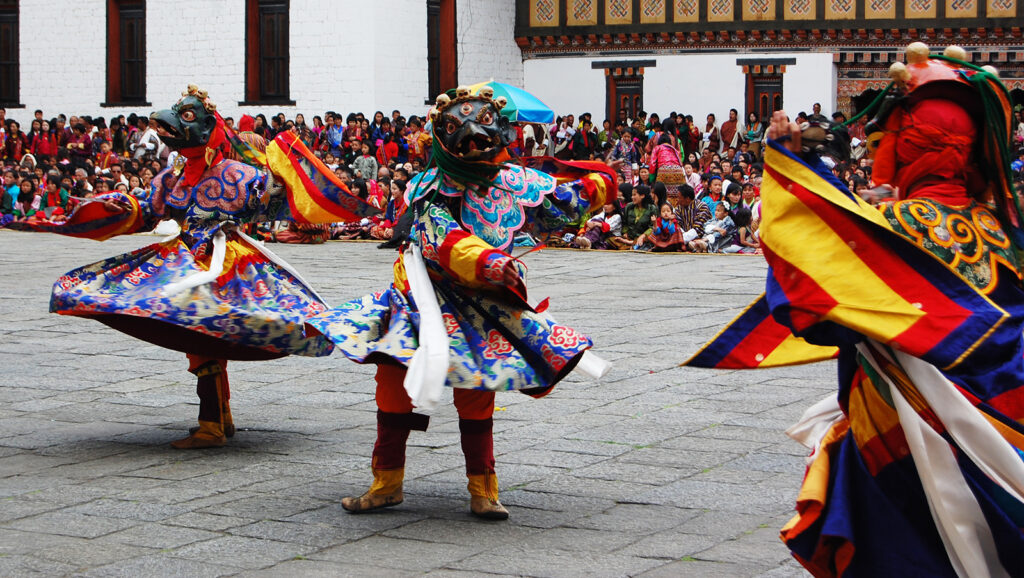
All of these dance performances can be witness during the Thimphu Festival Tour. The dances of the Thimphu Tshechu Festival convey sacred teachings through movement, music, and devotion. Each cham communicates lessons about life, death, compassion, protection, and spiritual growth. Bhutanese people attend to receive blessings and reflect on values that guide their daily lives. Visitors witness living traditions and gain insight into how Bhutan preserves its spiritual wisdom through celebration and art.