


Bhutan reveals itself at a gradual pace. The first impression may be of its iconic landmarks, like the white walls of Punakha Dzong, the prayer flags of mountain passes, the green roofs of Thimphu, or the dramatic silhouette of Tiger’s Nest clinging to its cliff above Paro. Yet beyond them lies a quieter country, one of forest trails, secluded monasteries and nunneries, farming villages and valleys where the traditional way of life has remained unchanged over generations.
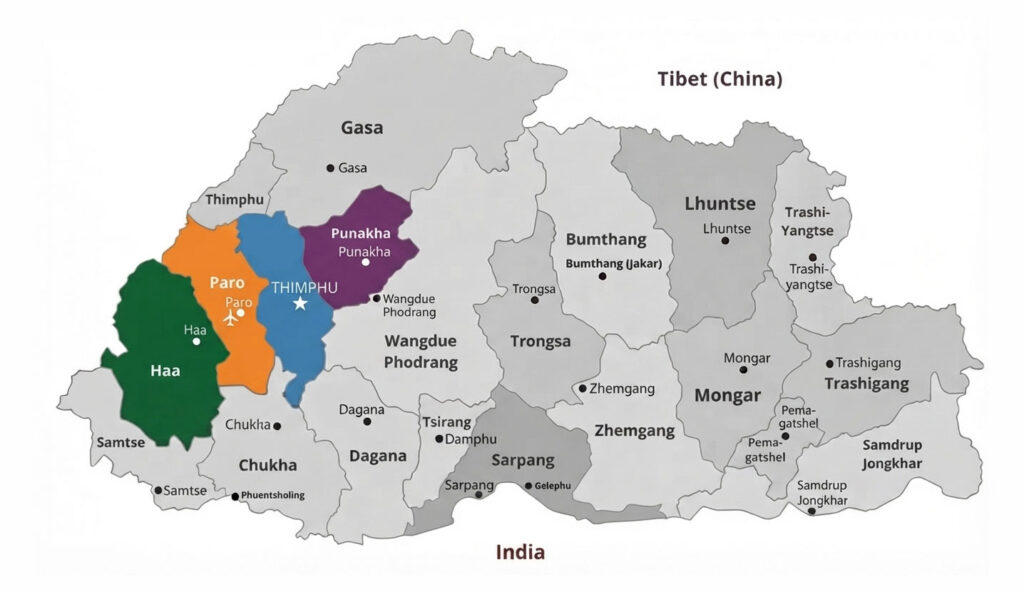
Western Bhutan encompasses the country’s western districts, including Paro, Haa, Thimphu and Punakha. Together, they form one of the most accessible parts of the kingdom, yet the landscape changes dramatically once you leave the main towns. It is a region that rewards travelers who are willing to leave the familiar route behind. Here, the journey itself becomes part of the experience. Roads climb through forests towards high mountain passes, ancient paths lead to remote hermitages, and small villages appear between folds of the landscape. In Haa Valley, a traditional homestay can offer a glimpse of rural life that no hotel can quite reproduce. At places such as Juneydrak Hermitage and Kila Goenpa, the sense of solitude is almost as memorable as the religious heritage itself.
For travelers searching for less-visited places in Bhutan, Western Bhutan Tour offers an appealing alternative to the standard itinerary. It still includes the country’s essential landmarks, but gives them a wider context. The great dzongs and monasteries are part of the story; so are the mountain paths, village homes, local traditions and quiet valleys between them.
Why Travel Beyond Bhutan’s Standard Route?
There is nothing wrong with following Bhutan’s classic route. Paro, Thimphu and Punakha contain some of the country’s finest cultural treasures, and Tiger’s Nest alone is worth the journey. However, travelers who spend a little more time in Western Bhutan discover that Bhutan is not defined by its famous landmarks alone.
The quieter places often provide the more memorable encounters. A trail through rhododendron forest can lead to a monastery built into a mountainside. A village road can open onto a broad Himalayan valley with hardly another traveler in sight. In Haa, an evening at a family-run homestay offers a glimpse into ordinary Bhutanese life that is difficult to find on a conventional sightseeing tour.
There is a different quality to these experiences. You are not simply moving from one attraction to the next. You begin to notice the landscape between the attractions. That is perhaps the greatest appeal of Western Bhutan. It gives you more time to experience Bhutan rather than simply see it.
Haa Valley: Bhutan’s Quiet Corner
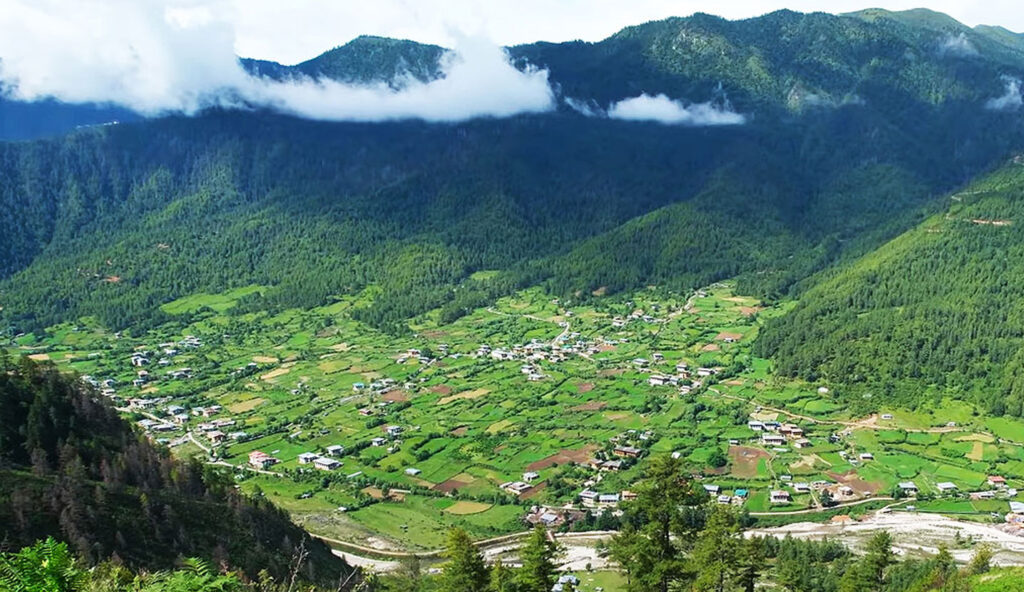
Of all the destinations in Western Bhutan, Haa Valley perhaps best captures the character of the region. Surrounded by mountains and historically separated from the main valleys by high passes, Haa has remained one of Bhutan’s quieter corners.
The valley is an appealing place to slow down. Small villages and agricultural fields spread across the valley floor, while forested mountains rise on either side. The pace feels markedly different from Thimphu, and even Paro can seem busy by comparison.
A stay in a traditional Haa Valley homestay makes the experience more personal. Rather than returning to an international-style hotel at the end of the day, travelers have the opportunity to experience local hospitality in a family environment and enjoy home-cooked Bhutanese food.
The surrounding valley also contains several important Buddhist sites. Lhakhang Karpo and Lhakhang Nagpo, known respectively as the White and Black Temples, are associated with Bhutan’s early Buddhist history. Juneydrak Hermitage is reached by a forested walk from Katsho village and occupies a secluded position on the mountainside.
It is precisely this combination of scenery, religious heritage and everyday life that makes Haa so rewarding. It does not feel like a destination assembled for visitors. It feels like a place where visitors have been allowed, briefly, to enter a world that was already there.
Chele La and Kila Goenpa
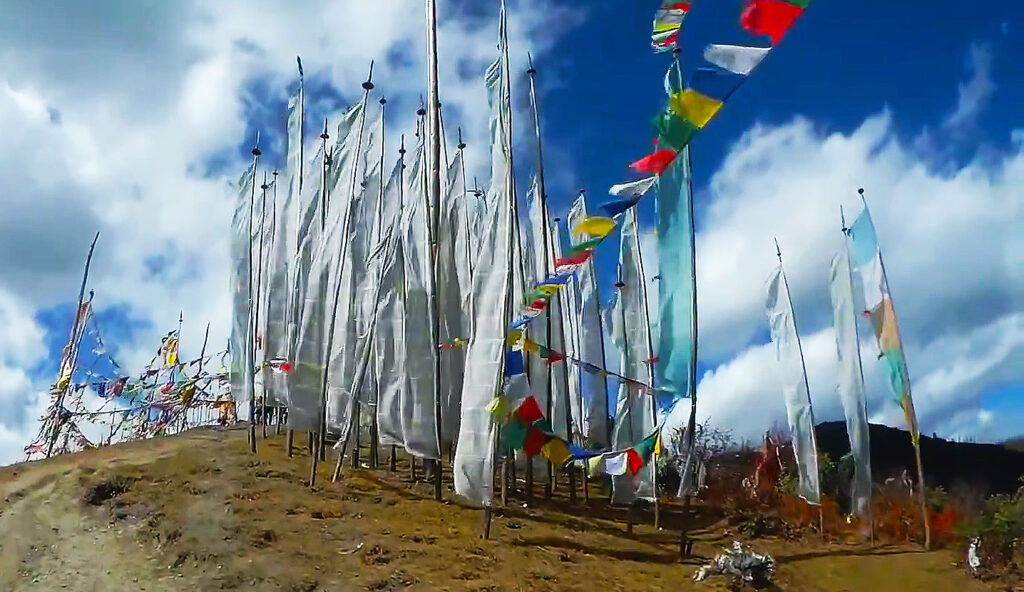
The road from Paro to Chele La Pass climbs steadily through dense mountain forest. At 3,988 metres, Chele La is the highest motorable pass in Bhutan, and the change in landscape is striking as the road leaves the valley behind.
On clear days, the pass opens towards distant Himalayan peaks, while prayer flags flutter against the high-altitude sky. From here, a trail leads through conifer forest and rhododendron thickets towards Kila Goenpa, one of Bhutan’s oldest nunneries.
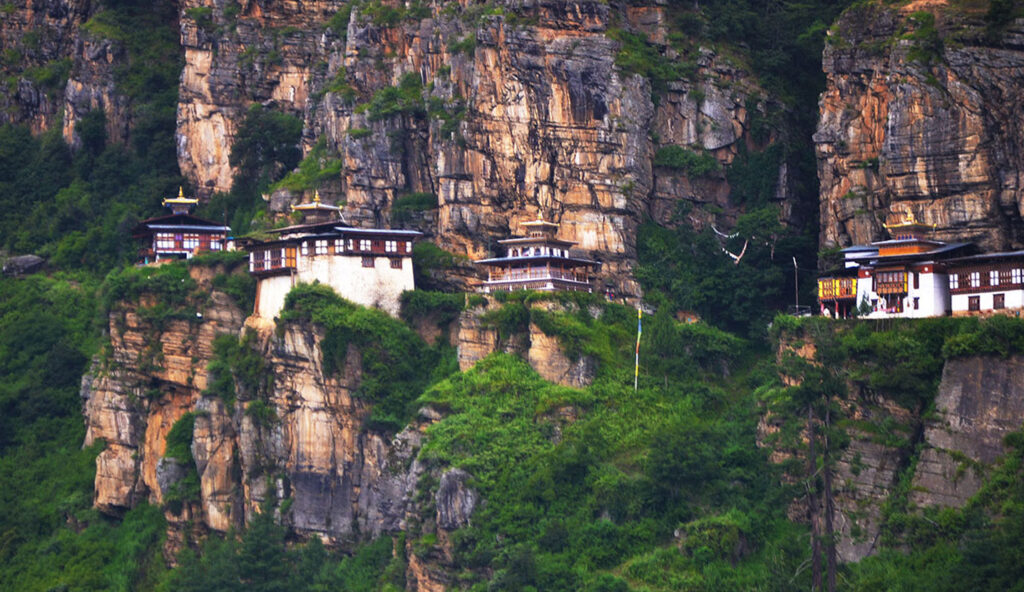
The monastery is built into the mountainside at roughly 3,500 metres, with small temples and retreat structures occupying the cliffs. The setting is wonderfully remote. The walk is not technically difficult, but the altitude and the uphill return make it a moderately strenuous excursion.
A Landscape Made for Walking
Western Bhutan is particularly well suited to travelers who enjoy gentle hiking and walking but do not want to commit to a multi-day trek. Some walks are short excursions from villages, while others involve several hours on mountain trails. The route to Juneydrak Hermitage passes through forest above Haa, while the Chele La to Kila Goenpa hike provides a more elevated mountain experience.
The famous Tiger’s Nest hike is considerably more demanding and is generally the longest walk of a Western Bhutan journey. Yet even here, the experience is as much about the changing landscape as reaching the monastery itself.
Walking also changes the way you experience Bhutan. From a vehicle, a valley becomes a view. On foot, it becomes a place. You notice the texture of the trail, the smell of pine and damp earth, the sound of water moving through the forest and the small details of village life that disappear when you are passing through a window.
Beyond the Famous Landmarks
Western Bhutan is sometimes reduced to its most recognizable attractions, but its real richness lies in the spaces between them. In Thimphu, places such as the Memorial Chorten, Choki Traditional Art School and Tashichho Dzong reveal different aspects of contemporary Bhutanese culture and religious life. In Punakha, the landscape becomes warmer and more agricultural, while Chimi Lhakhang and the villages around Lobesa offer a more intimate encounter with local traditions.
The great Punakha Dzong remains one of Bhutan’s architectural masterpieces, yet a walk through Talo Village offers another perspective on the valley. The village sits above Punakha and is known for its traditional homes, cultivated slopes and connections with Bhutan’s religious heritage. This is what makes a journey through Western Bhutan so rewarding. The famous places provide the framework, while the lesser-known ones give the journey its character.
Western Bhutan for the Curious Traveler
Western Bhutan is not necessarily for travelers who want to see as much as possible in the shortest time. It is better suited to those who enjoy lingering a little longer, walking a village path, talking with a local host or spending an afternoon somewhere without needing to fill every hour.
The region offers enough variety to keep an active traveler engaged, yet enough quiet spaces to make the journey feel restorative. There are mountain passes and forest trails, historic dzongs and secluded hermitages, lively town centres and villages where daily life unfolds at an unhurried pace. For anyone who has already seen the familiar images of Bhutan and wondered what lies beyond them, Western Bhutan offers the answer.
