


In an era when education is often defined by grades and test scores, the most meaningful learning can take place outside the classroom. School tours provide immersive experiences that allow students to engage directly with their environment, explore new perspectives, and apply knowledge in ways that make lessons tangible and lasting.
Nepal offers this extraordinary environment for learning. The landscapes and communities encourage observation and reflection in ways that traditional study materials cannot replicate. Students visiting Nepal encounter historical monuments and natural environments, merged with local ways of life that provide context and depth to their academic studies. Every small destination in this beautiful country offers a unique perspective, that provides an opportunity for learners to connect directly with the subjects they are exploring. Educators planning faculty-led programs can design experiences that balance structured instruction with immersive exposure. This creates an atmosphere that fosters engagement and contemplation.
Cultural Learning
The Kathmandu Valley itself provides a rich foundation for students of history, arts, anthropology, and architecture. Bhaktapur Durbar Square is a grand example of the amalgamation of history and urban planning and holds extensive intricate carvings that reveal the artistic achievements of the Newar people. Patan Durbar Square allows learners to examine architectural motifs and understand how traditional designs have influenced the region over time. At Pashupatinath Temple, students observe rituals that illuminate social and religious practices of the Nepali people. Smaller communities such as Bungamati and Khokana offer meetings with local craft traditions and daily routines that have persisted through generations. All these sites and experiences give students the appreciation for the continuity of culture amidst live settings rather than solely through textbooks.
Natural and Environmental Studies
Nepal’s ecological variety provides opportunities for immersive environmental learning. Students visiting Chitwan National Park can witness the behavior of rare wildlife, including rhinoceroses and tigers, while exploring conservation efforts firsthand. High-altitude areas around Annapurna or Langtang expose learners to glacial landscapes, alpine vegetation, and also about fragile ecosystems and how it is affecting the flora and fauna and local communities. Bird-watching excursions in Koshi Tappu Wildlife Reserve and Phulchoki, or river studies along the Trishuli gives students a chance to integrate observation with analysis. This delineates theoretical concepts in ecology and tangible environmental science. These experiences encourage active participation, where students gain understanding through direct interaction with the environment.
Adventure-Based Education
Adventure in Nepal provides learning opportunities that are both engaging and instructive. Trekking in regions such as the Annapurna Circuit or in Mustang provide first-hand information on the geological and geographical features of the Himalayas. River expeditions on the Seti or Bhote Koshi illustrate hydrological processes and sedimentation, giving context to classroom concepts in earth science and environmental studies. Faculty can design activities that require students to monitor glacial retreat, or analyze mountain weather patterns. These experiences encourage practical application of knowledge while cultivating problem-solving abilities and a sense of resilience in real-world settings.
Community and Cultural Engagement
Students gain deeper insights when they actively participate in local communities. Workshops in traditional cooking in Patan, pottery classes in Bhaktapur, and service activities at rural schools provide hands-on learning experiences. Observing festivals such as Bisket Jatra in Bhaktapur or the Mustang Tiji Festival exposes learners to communal celebrations, ritual practices, and artistic expressions that have endured for centuries. These interactions create opportunities for students to develop empathy, understand social responsibilities, and appreciate how traditions persist alongside gradual modernization. Experiencing culture in context provides a level of understanding that cannot be replicated through classroom study alone.
Flexible Academic Programs
Faculty-led programs in Nepal can be tailored to meet the learning objectives of each group. Students of history or art can focus on museum visits, architectural studies, and craft analysis, while those studying environmental science can participate in wildlife monitoring, forest surveys, or river ecology projects. Geography programs can include analysis of glacial formations, watershed management, or rural land-use practices. Fieldwork can be combined with lectures and discussions to ensure that theoretical knowledge is reinforced through practical experiences, giving students an integrated perspective on the subject matter.
Safety and Accessibility
Despite its rugged terrain, Nepal offers safe and organized travel options for educational groups. Students can focus on learning without concern for logistics as the country is equipped with modern accommodations and reliable transportation. Experienced local guides ensure that both cultural tours and treks through remote regions are conducted in a secure and well-supported manner. Lodges and medical facilities along popular routes such as Annapurna and Langtang provide additional reassurance. Even in less accessible areas such as Upper Mustang or Dolpo, professional guidance makes it possible for students to engage fully with the environment and culture while maintaining safety and comfort.
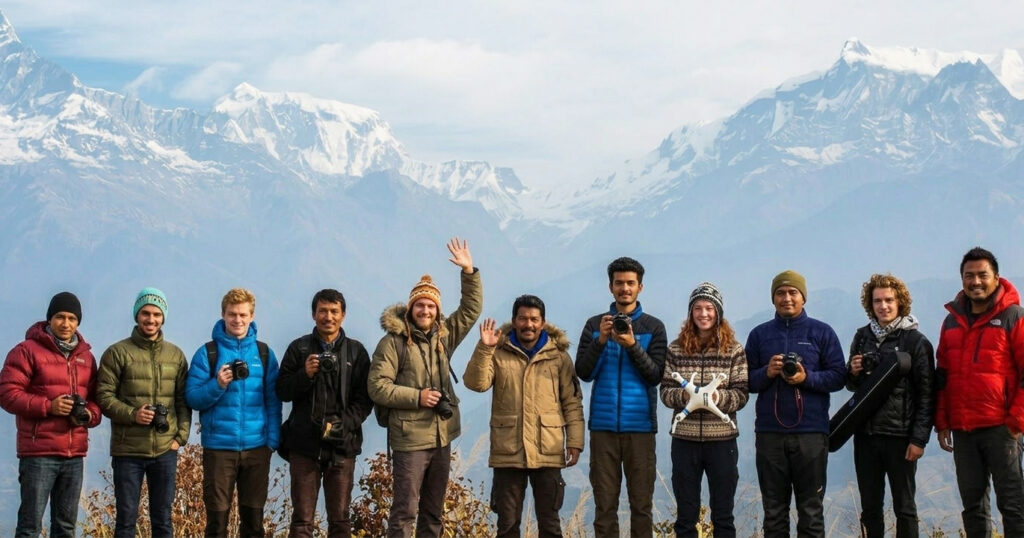
Nepal combines remarkable natural beauty, cultural depth, opportunity for adventure, and educational opportunity in a way that transforms learning into an immersive experience. Students completing faculty-led programs leave with insights into the environment, arts and architecture, communities, and history that extend far beyond conventional academic study. The knowledge gained, along with the memories of landscapes and personal experiences, fosters curiosity and understanding that continues long after the journey concludes.
