


For many travelers, Sikkim carries a quiet Himalayan charm shaped by mist-covered hills, monasteries, and mountain villages. Sikkim tour is now on the roster of almost every traveler. But there was a time when it was hidden for the rest of the world. For centuries, this ancient kingdom remained secluded within the eastern Himalayas, preserving its spiritual traditions, artistic heritage, dramatic landscapes, and simplicity. Much of that legacy continues to endure across the region today. Whether walking through the clean bazaars of Gangtok, wandering among the flowers of Yumthang Valley, or waking beside the terraced fields of West Sikkim, travelers encounter landscapes and communities where serenity, spirituality, and simplicity continue to exist in harmony.
Across the Himalayas, many regions are known for their mountains, pilgrimage routes, monasteries, and highland settlements. Sikkim carries these elements within a setting that feels calm and deeply harmonious. Snow-covered peaks rise above forested valleys, monasteries overlook mist-covered hillsides, sacred lakes glimmer in the sun, and life seems simple.
The sense of peace in Sikkim emerges through the relationship between culture, spirituality, governance, and nature. Visitors often notice it from the very beginning of their journey. Roads remain orderly and villages are carefully maintained.
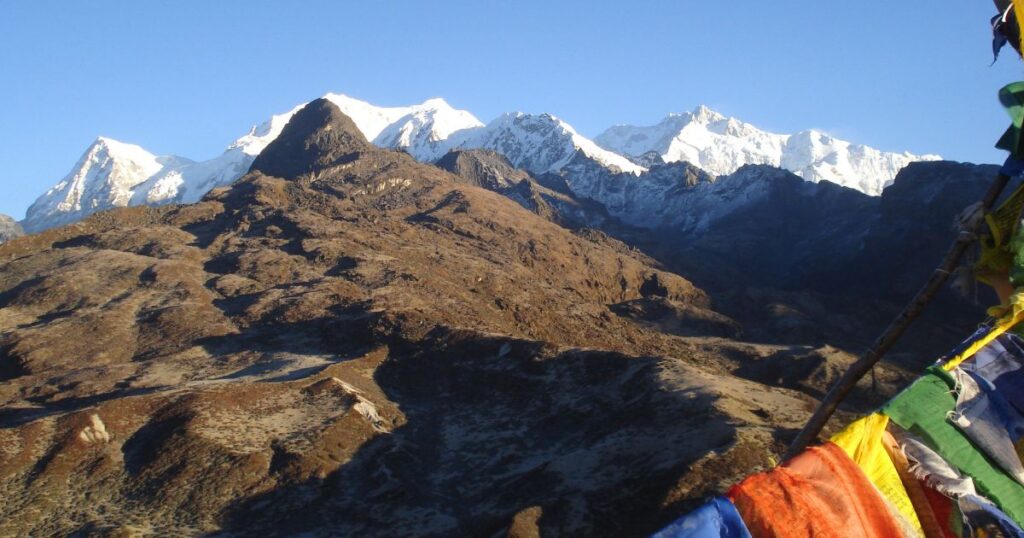
A Landscape That Encourages Stillness
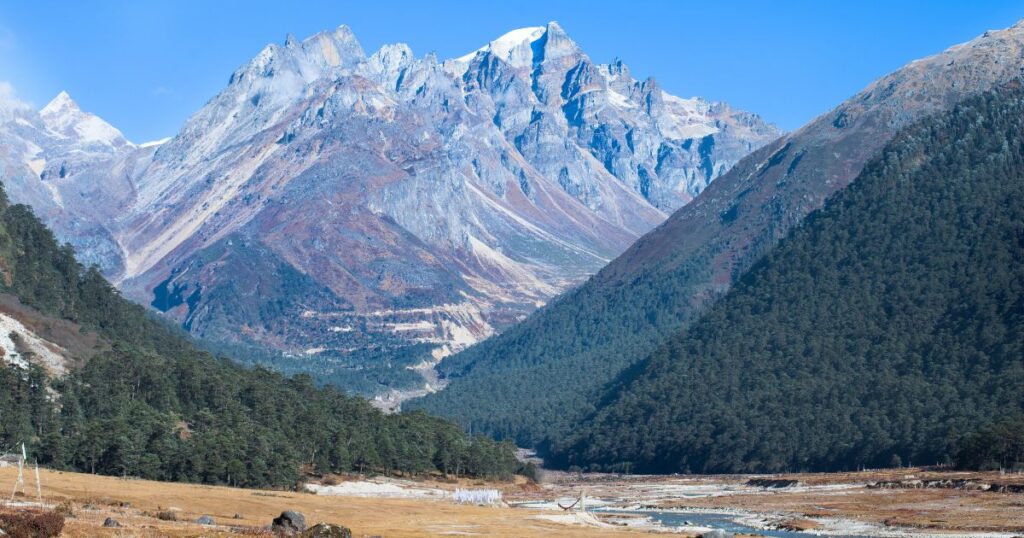
The geography of Sikkim complements the emotional character of the region. Deep valleys, dense forests, glacial rivers, and snow-covered peaks create an environment where nature remains dominant. Unlike many mountain destinations mismanaged by aggressive urban expansion, large parts of Sikkim still feel protected from visual chaos.
The presence of Kangchenjunga adds another dimension to this atmosphere. Revered as sacred by local communities, the mountain holds spiritual importance, and influences how people relate to the landscape itself. This reverence encourages restraint and preservation.
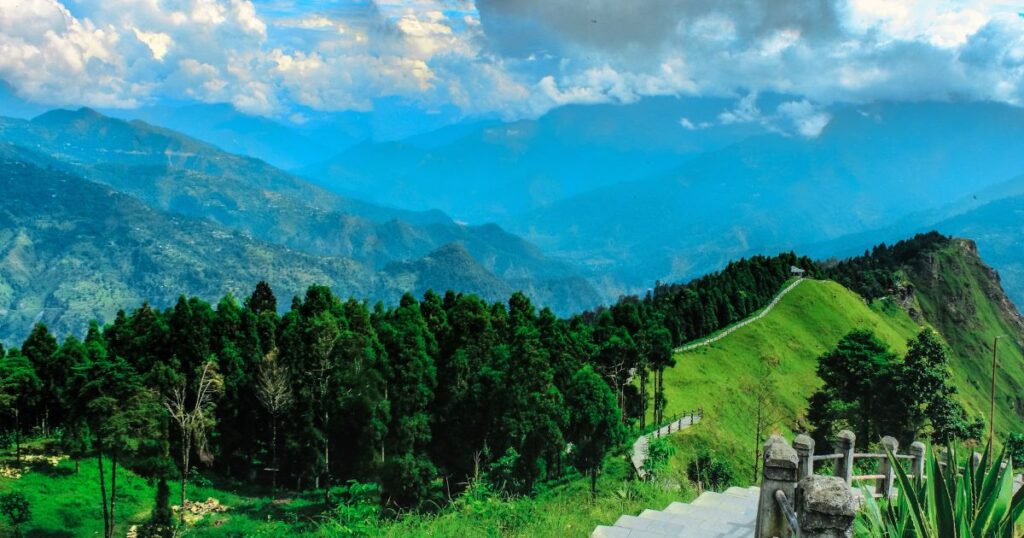
Clouds drift slowly across ridges. Prayer flags move quietly in the wind. Villages appear between forests rather than replacing them. The result is a Himalayan environment that feels naturally contemplative.
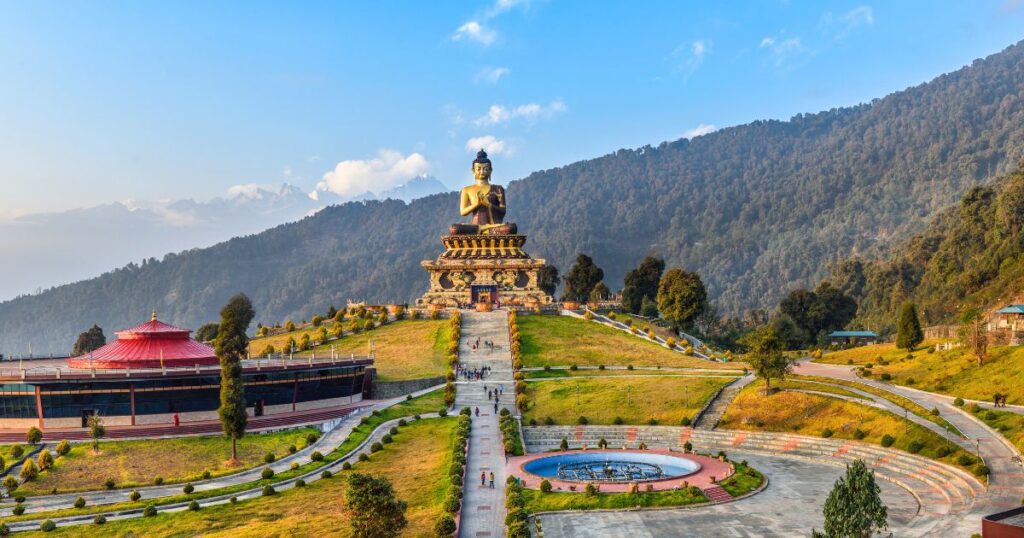
The Influence of Buddhism
A strong Buddhist presence deeply affects life in Sikkim. Monasteries are considered active centers of learning and ritual and are an integral part of community life. Festivals around these monasteries continue to follow ancient traditions, and prayer wheels turn quietly beside mountain paths.
Places like Rumtek Monastery and Pemayangtse Monastery carry an atmosphere that feels inherent rather than performative. Visitors are often struck by the absence of excessive noise and commercial pressure around these sacred sites.
The spiritual culture of Sikkim encourages patience and moderation. Respect for living beings, harmony with nature, and communal balance are values that continue to influence everyday interactions. Even travelers unfamiliar with Buddhist philosophy often sense the emotional effect of this environment.
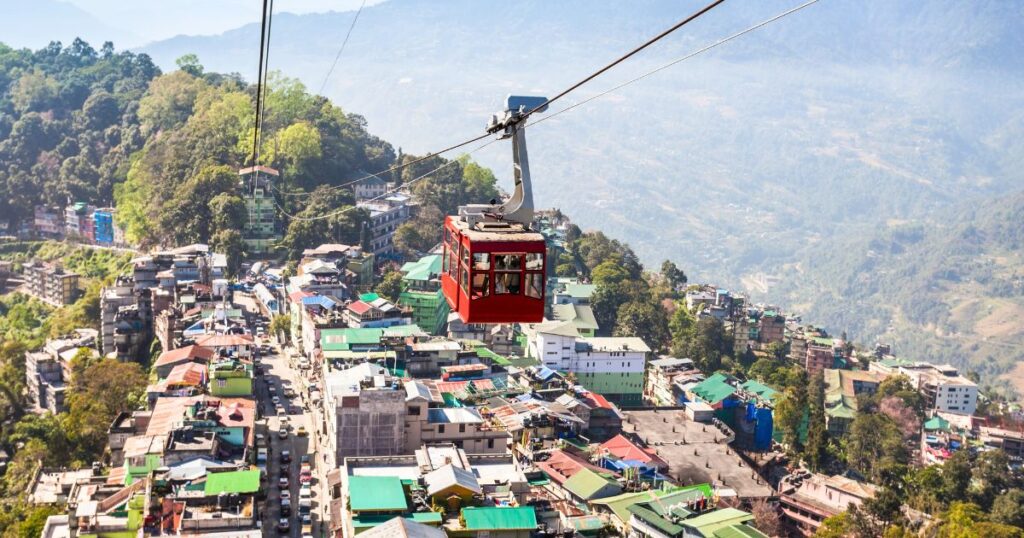
Cleanliness and Civic Discipline
One of the first things many travelers notice in Sikkim is how clean the towns and roads appear compared to many other mountain regions in South Asia. Public spaces are maintained carefully, littering is prohibited, and environmental awareness is visible across both urban and rural areas.
Gangtok reflects this particularly well. The capital city remains organized without losing its mountain character. Streets feel walkable and traffic is relatively controlled. In the capital, public behavior carries a sense of discipline uncommon in many busy hill destinations.
This order contributes directly to the feeling of peace. Noise pollution remains lower. Visual clutter is reduced. Travelers spend less energy navigating chaos and more time absorbing the surroundings.
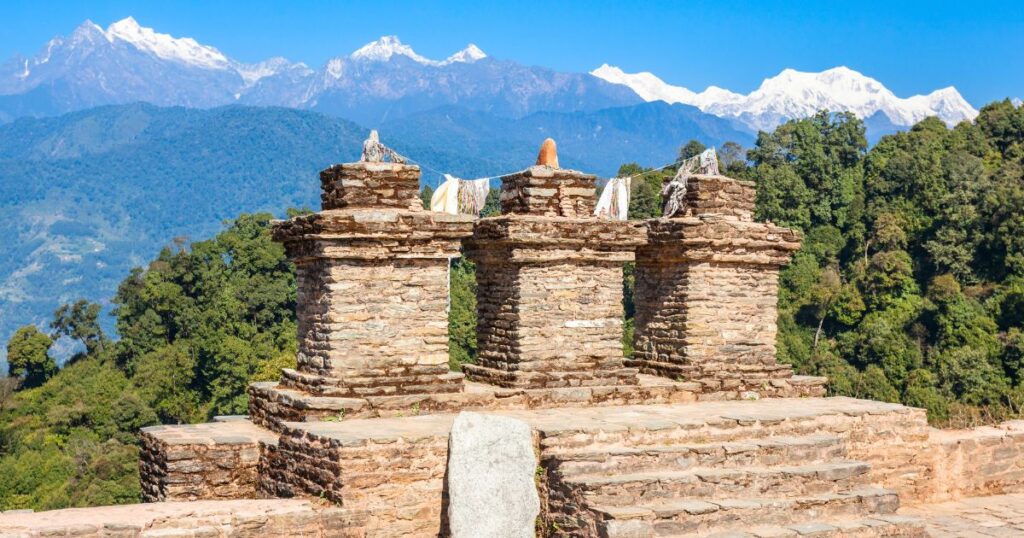
Cultural Harmony in a Small Himalayan State
Sikkim is home to diverse ethnic communities including Lepchas, Bhutias, and Nepalis, each contributing to the cultural identity of the region. Temples, monasteries, traditional homes, languages, and festivals coexist naturally within daily life.
Unlike places where rapid tourism development weakens local identity, Sikkim has largely retained a strong cultural foundation. Traditional architecture still appears in villages. Local customs continue to shape ceremonies and seasonal festivals. Food culture reflects both Himalayan and Tibetan influences while remaining distinctively local.
This continuity creates emotional stability within communities, and visitors often feel it without fully understanding why. The cultural atmosphere feels lived-in rather than curated.
Tourism Without Excessive Commercialization
Tourism exists across Sikkim, yet much of the state still avoids the overwhelming commercial intensity found in several Himalayan destinations. Towns like Gangtok receive visitors throughout the year, and many areas continue to feel intimate and uncrowded. Many travelers combine neighboring regions on their itinerary for a tour. One such combination is the Darjeeling Sikkim Tour of 8 Days. While Darjeeling is adjacent to the southern part of Sikkim, many travelers also combine a tour of the state along with Nepal and Bhutan. This Sikkim, Bhutan and Nepal Tour, is a perfect way to see different cultures that have similarity and yet are vastly distinct from one another.
Destinations such as Pelling, Yuksom, and remote mountain villages encourage slower travel. Travelers spend time walking through forests, visiting monasteries, sharing tea with local families, or simply watching clouds move across the mountains.
The absence of excessive nightlife, aggressive commercial advertising, and large-scale tourism infrastructure helps preserve the calm character of the region.
A Different Kind of Himalayan Experience
Many Himalayan journeys revolve around achievement. Most foreigners come to conquer a mountain, reach a pass, complete a trek or overcome altitude. Sikkim offers something quieter. The experience here is often emotional rather than dramatic.
People return remembering the sound of monastery bells through fog, long mountain roads lined with forests, conversations in peaceful villages, and mornings where clouds lifted slowly to reveal distant peaks. The state invites observation rather than urgency.
That is perhaps why Sikkim leaves such a lasting impression on travelers seeking calm rather than spectacle. Peace here is not presented as an attraction. It exists naturally in the landscape, architecture, traditions, culture, and pace of life itself.
